
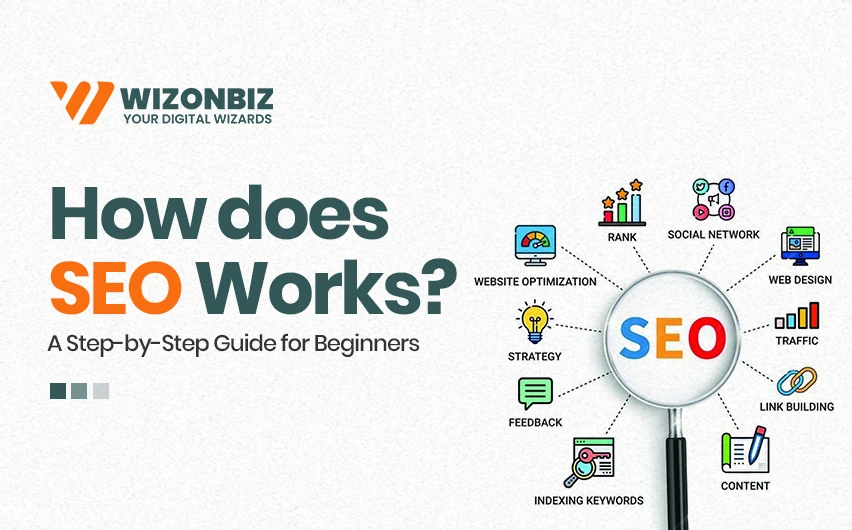
You may have a great website but it needs to be discovered by Google. This is where SEO enters the picture.
Okay, so how does SEO work? Essentially, SEO helps search engines better understand your website, and to match pages on your website to relevant searches.
It’s a combination of a few things working together including content, keywords, technical setup, links and user experience. It’s not about just ranking higher, but about attracting those who really need what you have to give.
If you’re new to SEO it may seem like a complicated process at first. This guide breaks it down into easy steps that you can really understand and use.
SEO means Search Engine Optimization. It is the process of making a website more visible in the organic search results.
Think about the last time you searched for something on Google. You probably clicked one of the first few useful results instead of checking every page.
SEO helps your website become one of those useful results. This sends more clear signals to search engines about your content, your website and your overall relevance.
But SEO isn’t about stuffing keywords to make Google notice. Good SEO begins with knowing what people search for and why they’re searching for it.
For example, the intent of someone searching for “best digital marketing agency in Nepal” is different. They are likely comparing agencies, services, experience, and credibility. That search needs a different page from someone searching “what is digital marketing.” Understanding this difference is where effective SEO begins.
Before understanding how SEO works, you need to understand search engines. Google generally works through three important stages: crawling, indexing, and ranking.
Search engines use automated programs, called crawlers, to find pages. These crawlers follow links and discover new or updated content across websites.
If Google can’t see your page, you can’t rank. That’s why technical website health matters more than most beginners realize.
After discovering a page, Google analyzes and stores its information. This process is called indexing.
Google looks at the content, structure, links and other signals of the page. It then decides whether the page is worthy of inclusion in its search index.
Ranking happens when someone performs a search. Google evaluates relevant indexed pages and orders them based on numerous signals.
These signals help determine which result is most relevant to the searcher’s needs. This decision can be made on the basis of relevance, content quality, authority, usability and any number of other factors.
The important point is simple: Google doesn’t rank websites randomly. It tries to return the most useful results for each particular search.
Now we can get to the main question: how does SEO work in practice?
SEO isn’t one single activity you complete once. It is a process where research, content, technical improvements, authority and measurement all work together.
SEO typically starts with keyword research. Keywords are the words and phrases people type into search engines. You shouldn’t just look at the search volume. A keyword is valuable if it bridges the gap between your audience’s search and your actual business.
For example, a local bakery may target “birthday cake delivery Kathmandu.” That could bring fewer searches than “cake,” but the searchers have stronger buying intent.
That’s why experienced SEO professionals look beyond the numbers. They look at the relevance, competition, intent and the possible business value of each keyword.
Once you’ve found relevant keywords, understand what the searcher actually wants. This is known as search intent.
Someone searching “how does SEO work” wants an explanation. Someone searching “SEO agency in Nepal” may be looking for professional services.
Your content should match that purpose. If Google sees that your page doesn’t satisfy the intent, strong keyword usage won’t save it.
Then, you need to create content that really answers the searcher’s question. It should be clear, correct, helpful and written for people first.
Don’t add unnecessary words to a simple topic to reach a word count. Be thorough on the subject, answer related questions, and stop when the reader has enough information.mUse headings to organize key points. Examples are a great way to help explain difficult ideas.
Keywords should appear naturally throughout the content. If a sentence sounds awkward because you’re forcing a keyword, rewrite the sentence. That’s a small detail, but it makes a noticeable difference. Good SEO content should sound natural even when you remove the SEO strategy behind it.
When your content is ready, optimize the page itself. This is popularly known as on-page SEO.
Start with the page title, meta description, URL, headings, and internal links. Images should also have descriptive alt text where appropriate.
Technical SEO is about how easily search engines can access and understand your website. It also impacts ease of use for the visitors.
Website speed, mobile usability, HTTPS, crawlability, indexability, site structure, all of that matters. Disorganized pages and broken links can cause unnecessary problems.
You don’t need to become a developer to understand technical SEO. You simply need to identify issues that could stop search engines or users from accessing important pages.
Content alone doesn’t always lead to good rankings. Search engines also look at signals that help establish the credibility of a site. Backlinks are a significant part of this. A backlink is a link from another website to your website.
Quality matters more than collecting hundreds of random links. A relevant link from a trusted website can be far more valuable than several unrelated ones.
Internal links also matter. They help visitors discover related content while helping search engines understand your site’s structure.
SEO doesn’t end when you publish a page. You need to monitor what happens after publication.
Tools like Google Search Console can show impressions, clicks, queries, and information on indexing. Analytics tools can tell you what people do after they get to your site.
See which pages get traffic, and what keywords get impressions. Use those knowledge points to enhance your existing content, and plan your next pieces. This is where SEO becomes a process and not a project.
Google considers many signals while deciding which pages should appear for a search. There is no magic ranking factor that will get you to the top.
Relevance is one of the biggest considerations. Your page needs to address what the person actually searched for.
Content quality also matters. Useful, accurate, original information gives readers a reason to stay and engage with your page.
Technical performance plays a role too. Search engines need to crawl, understand, and index your important pages properly.
Website authority can influence competitiveness. Relevant backlinks and strong internal linking can help search engines understand your site’s importance.
User experience matters as well. A page that works poorly on mobile or takes too long to load can frustrate visitors.
The competitive landscape also matters. Ranking for “SEO” is very different from ranking for a specific local service keyword.
So, don’t focus on one ranking factor alone. Strong SEO comes from getting several important areas working together.
This is probably one of the first questions businesses ask. Unfortunately, there isn’t a fixed number of days or months for SEO results. Some websites see early improvements within a few months. Competitive industries and difficult keywords can take considerably longer.
The timeline will be affected by your website’s age, authority, competition, content quality, technical health and the health of your backlink profile. Establishing confidence and visibility takes time for new sites. For established websites, existing pages that are properly optimized will move faster.
So if you see someone offering guaranteed rankings in a certain time frame, that’s a red flag. There are things in SEO that no consultant can control.
Instead, look for steady progress. Better rankings, increased impressions, qualified traffic, and more conversions are stronger indicators than rankings alone.
SEO becomes easier when you know which shortcuts to avoid. Many beginner mistakes come from focusing too heavily on rankings.
Keyword stuffing is one common problem. Repeating the same keyword unnaturally can make content difficult to read.
Ignoring search intent is another. You might rank temporarily, but irrelevant content rarely satisfies visitors or supports business goals.
Targeting highly competitive keywords immediately can also waste resources. Start with relevant opportunities where your website has a realistic chance.
Buying random backlinks is another risky shortcut. A large backlink count doesn’t automatically make a website authoritative.
Ignoring existing content is also a missed opportunity. Sometimes improving an old page can produce better results than constantly creating new ones.
Most importantly, don’t expect overnight results. SEO rewards consistent improvements, useful content, and patience.
You can learn basic SEO yourself. Keywords, content optimization, and technical basics aren’t impossible to understand.
The real challenge comes when your website starts getting competitive. Technical issues, content planning, competitor research, and tracking can quickly become a full-time job. An experienced SEO professional looks at the bigger picture. They don’t simply add keywords to pages and consider the work finished.
For businesses in Nepal, local search behavior adds another layer. People often search using location terms, Nepali-English phrases, and specific service-related queries.
This is where hiring the right SEO expert in Nepal can make a big difference. You need someone that understands search engines and how actual local customers search.
Here at Wizonbiz Digital we’re practical about SEO. We look at your website, your competitors, your keywords, your content and any technical issues and then we build a strategy around your goals.
If your website needs higher rankings, more organic traffic or more qualified leads, the approach should start with the right diagnosis. You shouldn’t have to spend money fixing things that aren’t actually slowing down your website.
If you’re unsure why your website isn’t getting enough search traffic, Wizonbiz Digital can help you find out what’s going wrong and what to work on next. A conversation or SEO assessment can be a good place to start.
After all, good SEO isn’t about chasing rankings for the sake of rankings. It’s about helping the right people find your business when they’re ready to look.
SEO helps your website show up in relevant unpaid search results. It improves content, technical features and authority in an effort to help search engines understand your pages better.
SEO is a way to help search engines find, understand, and trust your site. It combines relevant content, keywords, technical optimization, links and user experience.
Generally it takes some months before SEO shows any real progress. Timeframe depends on the competition, authority of the website, quality of content, technical health and consistency.
Yes, you can do basic SEO if you have the right resources and practice. But, when dealing with more technical or competitive projects, professional guidance is often helpful.
Yes, SEO can help businesses attract people actively searching for their products or services. It can also provide a long-term source of relevant organic traffic.
An SEO expert does keyword research, competitor analysis, website performance optimization, content planning, and results tracking. Their job is to translate search visibility into real business results.